
Key Takeaway: Taurine supports testosterone production by acting on the hypothalamus-pituitary-testis (HPT) axis and directly stimulating Leydig cells. Recent 2024 research confirms taurine significantly elevates DHT (dihydrotestosterone) levels and protects testosterone molecules from oxidative stress.
Contents
- How Taurine Increases Testosterone
Discover the HPT axis mechanism and Leydig cell activation - Latest Research (2024-2025)
New findings on DHT elevation and neuroprotective hormone effects - Why Do People Take Taurine?
Beyond testosterone: cardiovascular, brain, and metabolic benefits - How to Take Taurine for Testosterone
Optimal dosage, timing, and food sources - 5 Additional Benefits of Taurine
Stress reduction, cardiovascular health, brain function, performance, and fat burning - Safety and Dosage Guidelines
Evidence-based recommendations for daily supplementation - Frequently Asked Questions
Common questions about taurine and testosterone
How Taurine Increases Testosterone
Taurine supports testosterone production through two primary mechanisms:
1. The HPT Axis Regulation
Taurine regulates the hypothalamus-pituitary-testis (HPT) axis, your body’s central hormonal control system. Here’s how it works:
- Hypothalamus: Taurine stabilises GnRH (gonadotropin-releasing hormone) secretion through negative feedback between neurons
- Pituitary Gland: Stimulates luteinising hormone (LH) secretion, which signals the testes to produce testosterone
- Testes: LH triggers Leydig cells to synthesise and release testosterone
2. Direct Action on Leydig Cells
Beyond the HPT axis, taurine acts directly on Leydig cells in the testes. Research shows that taurine:
- Increases testosterone synthesis by enhancing autophagy (cellular cleanup) and inhibiting apoptosis (cell death)
- Protects testosterone molecules from oxidative stress
- Enhances the activity of key steroidogenesis enzymes (StAR, 3-HSD, 17β-HSD)
💡 Fun Fact: Taurine gets its name from the Latin word “taurus” (bull) because it was first isolated from ox bile in 1827. Despite the name, taurine does NOT come from bull urine or semen—that’s a persistent myth!
Latest Research (2024-2025)
Taurine Elevates DHT and Hormone Levels (2024)
A groundbreaking 2024 study published in PMC demonstrated that taurine significantly increases dihydrotestosterone (DHT) and dihydroprogesterone (DHP) levels in human cells.
Study Details
- Concentration tested: 0.25-1 mg/mL
- Results: Significant DHT elevation (p < 0.001)
- Mechanism: Enhanced miRNA-181 and miRNA-21 expression
- Application: Potential hormone therapy for neurodegenerative conditions
Key Findings
The study revealed that taurine’s hormonal effects are dose-dependent. Higher concentrations (0.75-1 mg/mL) produced the most significant increases in DHT and DHP hormones, suggesting taurine plays a regulatory role in gene expression associated with hormonal protection.
Sex and Gender Differences in Taurine Response (2025)
A comprehensive 2025 review in PMC highlighted that taurine research has historically focused on males, creating a significant knowledge gap. Key findings:
- In women, taurine (3g/day for 4 weeks) reduced homocysteine levels by 11%, supporting cardiovascular and metabolic health
- Taurine’s effects on oestrogen metabolism and testosterone regulation differ between sexes
- More research is needed to establish sex-specific dosage recommendations
⚠️ Important Note: A June 2025 NIH study challenged taurine’s role as an “aging biomarker,” finding that circulating taurine levels often increase with age in humans. However, this doesn’t diminish taurine’s proven benefits for testosterone support, cardiovascular health, and muscle function.
Why Do People Take Taurine?
Beyond testosterone support, taurine is essential for multiple body functions:
Cardiovascular Function
Regulates blood pressure, controls calcium levels in cells, and supports heart muscle function.
Nervous System
Supports neurotransmitter function and protects against neurodegeneration.
Immune System
Enhances immune cell function and provides anti-inflammatory protection.
Cellular Hydration
Maintains electrolyte balance and cellular water content for optimal function.
Taurine also provides powerful antioxidant and anti-inflammatory properties, protecting your cells from oxidative damage.
🔬 Serious Fact: Your body produces taurine naturally, but production declines with age and under stress. Dietary sources and supplementation become increasingly important for maintaining optimal levels, especially for testosterone support and muscle function.
How to Take Taurine for Testosterone
Dietary Sources of Taurine
Taurine is naturally found in animal-based foods:
High Taurine Foods
- Shellfish: Scallops, mussels, clams
- Fish: Tuna, salmon, mackerel
- Meat: Beef, pork, lamb
- Poultry: Dark meat chicken, turkey
Lower Taurine Sources
- Dairy: Milk, cheese (small amounts)
- Plant Foods: Minimal to none
- Note: Vegetarians and vegans should consider supplementation
Supplementation Guidelines
Recommended Dosage for Testosterone Support:
- Starting dose: 1 gram (1,000 mg) per day
- Optimal range: 3-5 grams daily for hormonal and performance benefits
- Timing: Can be taken any time of day, with or without food
- Consistency: Daily supplementation for 4-8 weeks to see full hormonal effects
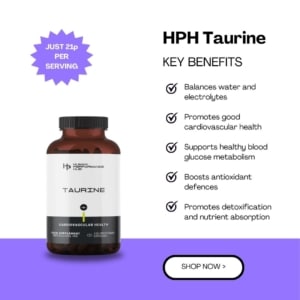
Here at Human Performance Hub, we provide high-quality Taurine supplements that deliver 1g of pure taurine per capsule.
5 Additional Benefits of Taurine
Beyond testosterone support, taurine offers comprehensive health benefits:
1. Lowers Stress Levels
Taurine increases glycine and GABA to calm the brain and ease anxiety. Studies show it has antidepressant effects and can improve learning ability and memory. It also protects the brain by reducing the harmful effects of excess glutamate.
2. Protects Cardiovascular Health
Research demonstrates taurine’s anti-inflammatory effects and blood pressure regulation. At therapeutic levels, taurine protects the heart from coronary heart disease and helps those with heart conditions exercise more effectively.
Clinical Evidence: A 2025 meta-analysis of 808 participants found that taurine reduces heart rate, systolic blood pressure, and diastolic blood pressure in a dose-dependent manner.
3. Supports Brain Function
Taurine protects the brain and supports overall cognitive function. As taurine levels decrease with age, supplementation can increase long-term memory and fend off neurodegenerative conditions. Studies suggest taurine may reduce symptoms of Alzheimer’s disease and improve overall memory.
4. Enhances Performance and Recovery
As an essential amino acid, taurine can:
- Increase muscle recovery after workouts and reduce soreness
- Improve performance by enhancing anaerobic and aerobic metabolism
- Boost endurance and strength during training
5. Improves Fat Burning
Evidence shows taurine can increase lipid metabolism during exercise, leading to enhanced fat burning. This is ideal for athletes maintaining a lean physique. Taurine also removes waste products that lead to fatigue and muscle burn, protecting muscles from oxidative stress.
💪 Performance Tip: Successive taurine treatment (daily supplementation) provides significantly better results than single-dose treatment for improving sperm motility, sperm count, and testicular antioxidant capacity.
Is It Safe to Take Taurine Daily?
Yes. According to the best available evidence, taurine has no negative side effects when supplemented appropriately.
Evidence-Based Safety Guidelines
Safe Daily Doses
- 2019 Research: Up to 3 grams per day
- EFSA Guidelines (2012): Up to 6 grams per day
- Clinical Studies: 3-5 grams daily with no adverse effects
Long-Term Use
Numerous studies confirm taurine’s safety for continuous daily supplementation. No common side effects have been identified in clinical research to date.
🔬 Serious Fact: While there’s insufficient evidence to call taurine the “best supplement” for any single purpose, customer satisfaction data shows 98% would recommend taurine, 97% report better sleep, 77% fall asleep faster, and 78% wake less frequently throughout the night.
Frequently Asked Questions
Does taurine increase testosterone levels?
Yes, taurine supports testosterone production by regulating hormone release from the hypothalamus and pituitary gland (the HPT axis). It also acts directly on Leydig cells in the testes to increase testosterone synthesis. Research from 2024 confirms taurine’s role in elevating dihydrotestosterone (DHT) levels.
How much taurine should I take for testosterone support?
The recommended dose ranges from 3-5 grams daily for healthy testosterone function. Start with 1 gram per day and increase gradually. Studies show consistent benefits at 3g/day with no adverse effects reported.
How long does it take for taurine to affect testosterone?
Most users notice improvements in energy and muscle strength within 2-4 weeks of consistent supplementation. Hormonal changes occur gradually as taurine supports the HPT axis function over time.
Can women take taurine for hormonal support?
Yes. In women, taurine helps regulate oestrogen metabolism and detoxification by raising testosterone levels in androgen receptors. A 2025 study confirmed taurine’s benefits for hormonal balance in both men and women.
Are there any side effects of taurine supplementation?
Research has not identified any common side effects from taurine supplementation at recommended doses (3-6 grams daily). Taurine is considered safe for long-term daily use according to EFSA guidelines.
Can I get enough taurine from food alone?
While taurine is found in meat, fish, and dairy, supplementation ensures optimal levels for testosterone support and performance benefits. Vegetarians and vegans especially benefit from supplementation as plant foods contain minimal taurine.
Taurine Supplements at Human Performance Hub
Now that you understand how taurine supports testosterone production and overall health, explore our premium taurine supplements at Human Performance Hub.
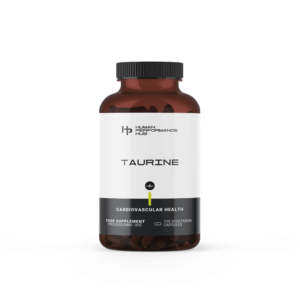
Our high-quality taurine provides 1g of pure taurine per capsule, ideal for supporting testosterone levels, muscle recovery, and overall performance.
Taurine Bottle
Take a look at our range online today, or get in touch with us for tailored advice.
Taurine is an essential amino acid produced in your body. It is crucial in energy production, making it an ideal supplement for working out. But only a few people know if it helps with the production of testosterone. Our experts here at Human Performance Hub have put together this blog to tell you the benefits of taking taurine. But first things first, does taurine give you testosterone?
Taurine does give you testosterone, which can help you to build muscle strength. As testosterone is used to maintain bone density, muscle mass and muscle strength, taking taurine can help protect the production of testosterone molecules from oxidative stress.
Learn more about how taurine gives you testosterone with Human Performance Hub.
References and Sources
- PMC (2024). Investigating the potential neuroprotective benefits of taurine. Read study
- PMC (2023). The role of taurine in male reproduction: Physiology, pathology and implications. Read study
- PMC (2025). Do Sex and Gender Interact with the Biological Actions of Taurine? Read study
- NIH (2025). Taurine is unlikely to be a good aging biomarker. Read article
- NCBI (2019). Taurine supplementation safety and efficacy. Read study
- European Food Safety Authority (EFSA) 2012. Guidelines on Taurine Safety. Read guidelines